
7 Signs to Look Out For
Finding safe hotels in Abuja matters more than finding a cheap one. A low nightly rate means nothing if the property has no gate, no CCTV, and no way to verify who else is walking the corridors at 2am. This guide covers the specific signs that separate genuinely safe hotels in Abuja from listings that just say “secure” in the description.
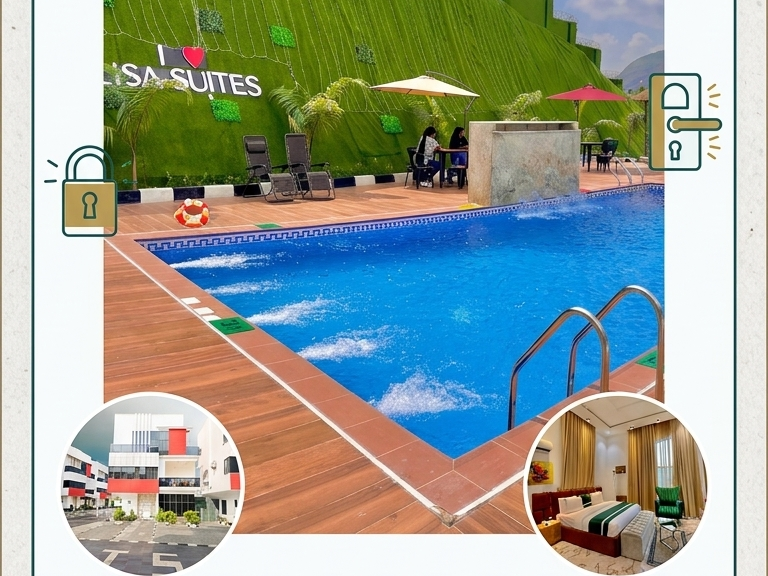
Table of Contents
- What Makes Hotels in Abuja Actually Safe?
- 7 Signs of Safe Hotels in Abuja You Can Check Before Booking
- Red Flags That Signal a Hotel Isn’t as Safe as It Claims
- Why Location Matters for Safe Hotels in Abuja
- Comparing Safe Hotels in Abuja by Price Tier
- Government Travel Advice on Staying Safe in Nigeria
- Frequently Asked Questions
- Booking a Safe Hotel in Abuja: What to Do Next
What Makes Hotels in Abuja Actually Safe?
Safety in a hotel comes down to three things: who can get in, who is watching once they’re inside, and what happens if something goes wrong. Marketing copy calling a property “secure” is not proof of any of this. You need specific, checkable details before you hand over a deposit.
Abuja is a large city with sharply different security profiles by district. A property in a gated diplomatic zone and a property on a busy commercial strip can carry very different risk levels, even if both call themselves hotels in Abuja on their website. This is exactly why a single-word claim like “secure” on a booking page tells you almost nothing on its own, and why the checklist below focuses on specific, verifiable details instead.
7 Signs of Safe Hotels in Abuja You Can Check Before Booking
1. 24-Hour Security and Gated Access
Ask directly whether security staff are on site around the clock, not just during check-in hours. A gated compound with a manned entry point is the single biggest factor separating safe hotels in Abuja from open-access buildings anyone can walk into.
2. CCTV Coverage in Common Areas
Cameras in corridors, entrances, and parking areas act as both a deterrent and a record if an incident happens. Ask the property directly whether CCTV covers guest-facing areas, not just the reception desk.
3. Verified Guest Reviews
Read recent reviews specifically for comments on security, not just comfort or Wi-Fi speed. A pattern of guests mentioning they felt safe walking in after dark is a stronger signal than a star rating alone.
4. Location Inside a Secured District
Where a hotel sits inside Abuja changes its baseline security profile. Districts with heavy diplomatic or government presence typically carry stronger policing and access control than commercial strips further out.
5. Staff Verification and ID Checks at Entry
Ask whether the property logs visitor ID at the gate and confirms who guests are before allowing entry. This single step filters out a large share of the risk that comes with open, unmonitored access.
6. Fire Safety and Emergency Exits
Safety is not only about intruders. Confirm the property has visible fire extinguishers, marked emergency exits, and a working smoke detector in the room itself.
7. Transparent Pricing With No Hidden Charges
This might not sound like a safety signal, but it is. Properties that spring surprise charges at checkout are often the same ones cutting corners on security staffing to protect their margin. Transparent, upfront pricing is a reasonable proxy for a well-run operation overall.
Red Flags That Signal a Hotel Isn’t as Safe as It Claims
Not every warning sign is obvious from the listing page. A few patterns are worth watching for specifically when you’re comparing safe hotels in Abuja against properties that only describe themselves that way without backing it up:
- No mention of gated access or security staffing anywhere in the listing, only vague words like “secure location”
- Reviews that consistently avoid the topic of security entirely, even in longer, detailed write-ups
- No visible photos of an entrance gate, reception desk, or common areas in the listing
- Reluctance from the property to answer direct questions about security staffing hours when you contact them before booking
- Pricing that seems unusually low relative to comparable properties in the same district, with no clear explanation
None of these on their own confirms a property is unsafe, but two or more together are worth treating as a reason to ask more questions before booking.
Why Location Matters for Safe Hotels in Abuja
Asokoro is one of the districts most closely associated with safe hotels in Abuja, largely because of what surrounds it rather than any single property’s own measures. It sits close to the World Bank office (roughly 1.8km away) and the ECOWAS Secretariat (roughly 1.5km away), inside a district with a heavy diplomatic and government presence and correspondingly tighter security and access control than many commercial areas of the city.
That context matters when you’re comparing listings. A property advertising “security” inside a low-traffic residential district with limited street lighting is not offering the same baseline as one inside a heavily monitored diplomatic zone, regardless of what either website claims.
![Safe hotels in Abuja gated entrance with 24-hour security staff"]](https://lisasuites.com/wp-content/uploads/2026/07/Gemini_Generated_Image_awi3ksawi3ksawi3.png)
Comparing Safe Hotels in Abuja by Price Tier
Room type and price affect space and facilities, not baseline security, since access control typically applies to the whole property rather than individual rooms. This is a useful distinction when comparing safe hotels in Abuja across different budgets. Here’s how one Asokoro property, Lisa Suites, structures its tiers, all of which sit behind the same gated access and 24-hour security.
| Room Type | Nightly Rate | Security Access | Facilities Included |
|---|---|---|---|
| Studio Apartment (Imperial) | ₦70,000 | 24-hour gated access | Gym, pool, spa, restaurant |
| Studio Apartment (Grand) | ₦90,000 | 24-hour gated access | Gym, pool, spa, restaurant |
| One Bedroom | ₦150,000 | 24-hour gated access | Gym, pool, spa, restaurant |
| Two Bedroom | ₦200,000 | 24-hour gated access | Gym, pool, spa, restaurant |
| Three Bedroom | ₦250,000 | 24-hour gated access | Gym, pool, spa, restaurant |
You can view current availability and confirm room-specific details on the rooms page.
Government Travel Advice on Staying Safe in Nigeria
Beyond individual hotel checks, it’s worth reading current government travel guidance before you book. The UK government’s foreign travel advice for Nigeria covers region-specific safety context that changes over time and is worth checking directly rather than relying on a single hotel’s own claims.
Frequently Asked Questions
What makes a hotel genuinely safe in Abuja, not just marketed as safe?
Verifiable details: 24-hour on-site security, CCTV in common areas, gated access with visitor ID checks, and a location inside a well-policed district. Marketing language alone is not proof of any of these.
Are serviced apartments safer than standard hotels in Abuja?
Not automatically. Safety depends on the specific property’s access control and location, not the category of accommodation. A serviced apartment with no gate is not safer than a hotel with 24-hour security.
Is Asokoro considered one of the safer districts in Abuja?
Asokoro is a diplomatic and government district with a heavy security presence due to its proximity to embassies, the Presidential Villa, and institutions like ECOWAS, which typically means tighter access control than commercial parts of the city.
What should I ask a hotel directly before booking if safety is a priority?
Ask whether security is on site 24 hours, whether CCTV covers guest-facing areas, whether visitor IDs are logged at entry, and whether the room has a working smoke detector and marked emergency exit.
Should I avoid a hotel if it doesn’t mention security in its listing at all?
Not automatically, but treat it as a reason to ask before booking rather than assuming it’s covered. The safest hotels in Abuja usually state their security measures clearly because it’s a selling point, so a total absence of any mention is worth a direct question, not a guess.
Booking a Safe Hotel in Abuja: What to Do Next
The fastest way to confirm a property is genuinely one of the safe hotels in Abuja, rather than one that simply claims to be, is to ask the specific questions in this guide directly before you book. Applying this checklist consistently is how you separate safe hotels in Abuja from listings that only use the word for marketing. Check gated access, CCTV coverage, ID verification at entry, and district-level security context together, not any single factor in isolation.
Check current availability and room details at lisasuites.com/rooms, or reach the reservations team directly on WhatsApp at +234 813 688 8875.


[…] These are the questions travelers ask most often when they’re still deciding where to stay in Abuja. […]